
By Nadia Friedman, October 2025
Credit: GW Dining
For Jewish students at George Washington University, kosher dining isn’t just a nice extra, it’s essential. The university has been actively working on this, and this year’s expanded options during the High Holidays show that effort. Compared to last year’s Passover meals, which were only at Thurston Dining Hall and felt limited and low-effort to say the least, this is definitely progress. After actually trying the meals and navigating the kosher on campus system, it’s clear that while things have improved, there’s still room for growth.
GW Dining partnered with GW Hillel and the Center for Interfaith and Spiritual Life to roll out expanded kosher offerings from October 2nd October 18th. According to the announcement, sealed OU and Star-K certified meals are available at all three all-you-care-to-eat dining halls and at Shenkman and District House Markets. They also promoted “kosher-style” dining stations in the halls, with rotating menus featuring Jewish meal classics, like falafel, white fish salad, or pastrami on rye.
On paper, it looks impressive. Five locations, certified kosher meals, including options for students who are less strict about proper Kosher law. It reads like GW is taking kosher dining seriously. For students who have struggled in the past to find even a single kosher option on campus except for Zingers in the lower level of the GW Hillel building, the announcement was encouraging. But the reality does not line up perfectly.
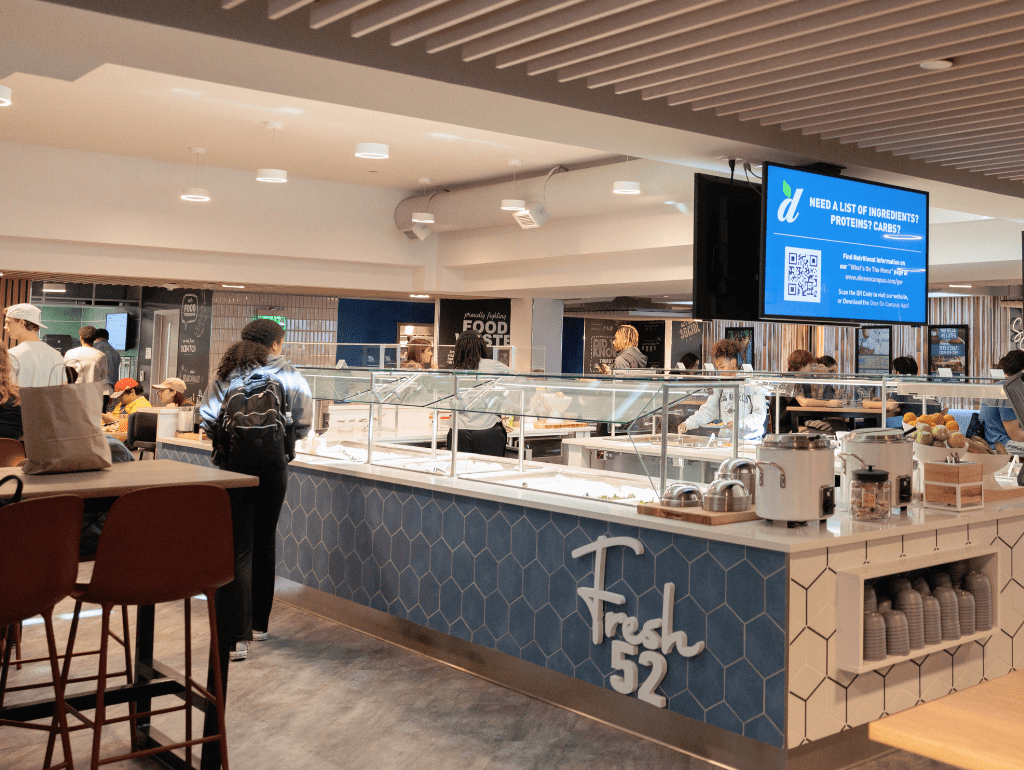
I wanted to test these Kosher options myself, so when I went to Shenkman Dining Hall and asked where the kosher-style section was, the staff simply said, “Everything here can be kosher.” The idea seemed to be that if a dish didn’t involve pork, shellfish, or mixing meat and dairy, it counted. That’s not inherently incorrect, but it’s not what most students expect when they hear the word “kosher.” Kosher-style could have been a useful middle ground.
For example, meals made with kosher ingredients, even if not in a kosher kitchen which was made clear. Instead, there were no labels, signs, or dedicated sections. For students who are more flexible, like myself, that may work, but for others it creates uncertainty.
The safer option is the certified, prepackaged kosher meals. These are frozen, sealed, and OU/Star-K approved, so students can rely on them for kosher dining. Using a meal swipe, I tried the pot roast with mashed potatoes and vegetables, and it was pretty good. It tasted like what I expected, not necessarily gourmet, but filling and trustworthy. Other options include chicken, turkey, and fish with different sides.
The trade off here is convenience. Because they’re frozen, they need to be heated, which isn’t always ideal for students in between classes. At the same time, frozen meals make sense for dining operations. They’re easier to stock, they last longer, and they guarantee consistency. But on the contrary, these factors could be avoided if there were just a dedicated dining hall section. With a meal plan, they cost one swipe. Without one, they cost $17, which seems like a steep price for what essentially was a kosher TV dinner.
What’s missing most right now is flexibility. The current system is heavily dinner focused, with no options for breakfast, lunch, or snacks. A kosher bagel station, a small selection of sandwiches, or even traditional snacks like hummus and pita chips would make a big difference. These kinds of lighter, ready to eat options are staples of campus dining in general, and kosher students deserve the same variety.
Another issue is that the “grab-and-go” label doesn’t fully match what you’re receiving. Yes, the meals are available in campus markets, but if you need to microwave a frozen dinner, it’s not really grab-and-go. For students with packed schedules, that can be a deal breaker. Offering a mix of frozen meals and a few ready to eat certified options would make the program more practical day-to-day.
These details matter because GW falls in the top 60 schools by Jewish population percentage in the country. Kosher meals are not a niche request but a central part of serving the campus community. Students typically say they’ll “take what they can get,” but that reflects lowered expectations rather than true satisfaction. The message is that Jewish students shouldn’t have to settle.
However, it’s important to acknowledge the progress. Compared to last year’s very limited options, this year’s program is a noticeable step forward. Partnering with Hillel shows that the dining team is paying attention. The certified meals provide a safe baseline. And the fact that kosher meals are now offered at multiple locations across campus means students don’t have to travel to just one dining location to find them. That type of accessibility matters.
Kosher dining at GW is better than it’s been, and that’s worth recognizing, though it’s still a work in progress. Clearer kosher-style options, more variety, and a balance between reliability and convenience would make a big difference. Right now, the system feels functional but not seamless. It’s something you can work with, but not something fully integrating Jewish students into everyday campus life.
Jewish students at GW don’t expect five-star meals, but they do expect consistency, clarity, and accessibility. This is a standard that all students deserve from campus dining. Food is one of the most basic ways a university shows its students that they belong. When kosher options are limited it sends the opposite message.
This year shows progress, but shouldn’t be the endpoint. With one of the largest Jewish populations of any university, GW has the chance to set the bar for how kosher dining can work on campus. Until that happens, students will keep utilizing what is available. Kosher dining should feel as natural and dependable as every other part of eating at GW.



 Tekiah Magazine
Leave a comment