

By Ariella Mandell, December 2025
Credit: Joshua Sharpe
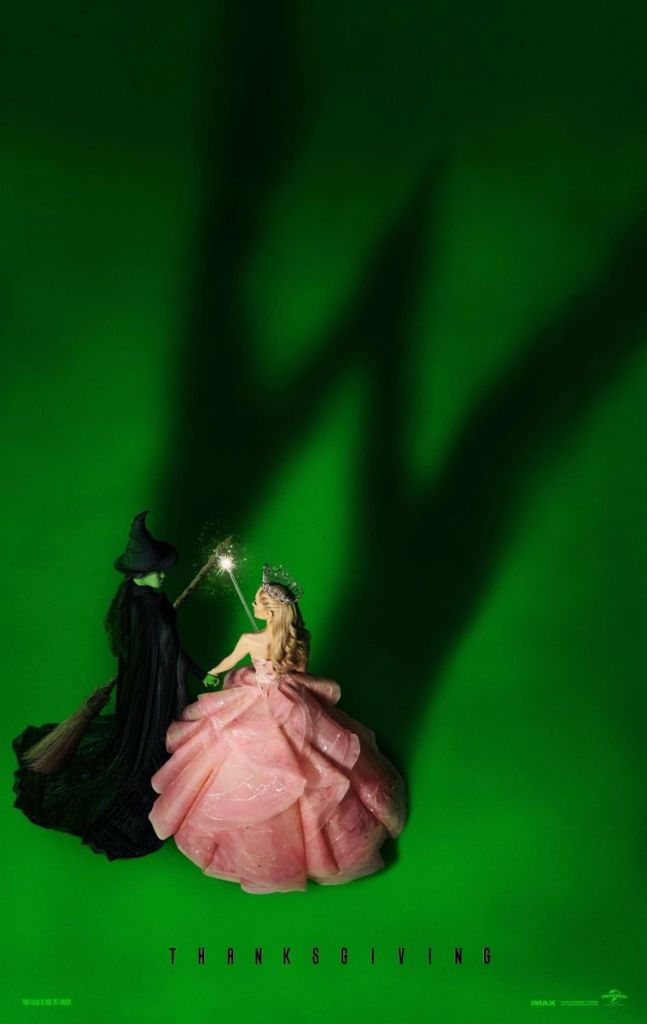
First premiering in the Robert Gershwin theater just before Halloween on Oct. 30, 2003, the musical Wicked has been a smash hit. The show is based on the original novel published in 1995 by Gregory Maguire that tells the untold tale of the Wicked Witch of the West. The Broadway show itself is the fourth-longest-running show in the history of Broadway, grossing almost $1.8 billion and counting in its 22-year run.
In 2016, the project to adapt this musical to the big screen began, and in Nov. 2024 director Jon Chu finally led the release of part one of this two-part movie series. The movie, starring Cynthia Erivo as Elphaba and Ariana Grande as Glinda, made over $750 million in the past year alone.
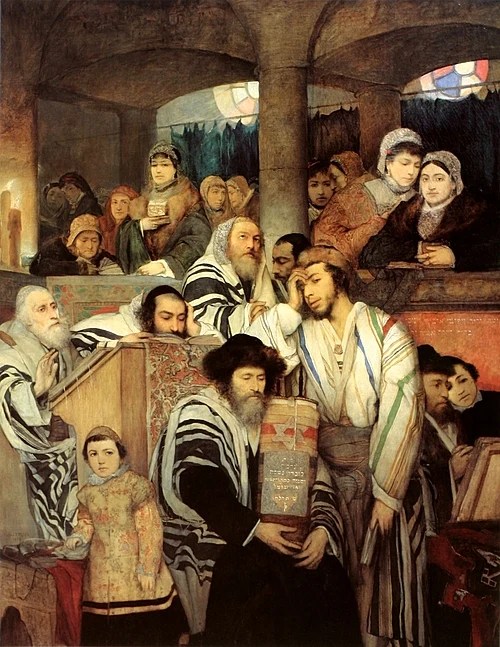
Beyond its commercial success, Wicked has also led to commentary about how it can be described as an allegory for the Jewish struggle. Maguire has noted in interviews through the years that his original book intentionally tells a story of prejudice, but describes his work as not aligning with a certain group that has been discriminated against, more so as an overall representation of what prejudice and discrimination may look like. Even so, the allegory towards Jews seems to be too prevalent to not make note of.
Adaptations have slightly changed over the years, but in the original book by Maguire, Elphaba was noted to have a large, hooked nose. This was not an offhanded description, but a characteristic that was repeatedly brought up throughout the novel. Large noses have been a typical stereotype associated with Jewish people for centuries. This harmful cliche began in medieval Europe, when Christian artists would depict Jews as having large noses to prove them as “other” and solidify the separation of them from Christian Europeans.
Another way that Elphaba is a physical depiction of the idea of being “other” is her obvious green skin. By making her skin tone such a vibrant, unusual, and fictional color, Maguire is highlighting her difference from the rest of the characters to the extreme. He also includes this as a key detail of the storyline, as she is bullied for her skin color, and ends up having to live a large portion of her life in isolation. This is taken even more to the extreme in the musical adaptation than originally represented in the book as well. Even so, both rely heavily on central political themes of social injustice due to appearances or societal alienation.
A common theme shown throughout Wicked is the idea of scapegoating. Scapegoating is the act of blaming a person or group for issues that they are not the cause of. This is what happens to Elphaba when everyone is quick to believe the lies that are being spread about her by Madam Morrible and the Wizard to hide their own actions, simply because she looks different than the rest of them.
Throughout history, the Jewish people have been used as scapegoats in many settings. The most prominent example was during the Holocaust when Hitler took advantage of previous prejudice against Jews and spread the ideology that Jewish people were to blame for all of Germany’s issues at the time. He did this through changing textbooks in school, placing posters around, and showing Germans films that depicted Jews as diseased and dangerous people. Similarly, in Wicked, clips in the movie show posters being hung around Oz that depict Elphaba as an ugly and dangerous witch, blaming her for problems she did not create.
In both these instances, by creating the visual of such an evil “other,” they were able to grow such mass support because people liked the idea of having someone to blame for issues that were not themselves. This led to mass persecution in both cases, of Jewish people during the Holocaust and of the animals in Wicked.
Another way that this franchise represents the Jewish struggle is through Elphaba’s own relationship with her identity. In the novel, Elphaba is shown to feel misunderstood by even those closest to her, including her family and closest friends. This is a common feeling amongst many Jews even in the modern day. Because of misrepresentations and stereotypes of Jewish people in history, many people do not fully understand Jews, even if they are not actively persecuting them.
In the beginning of the book when Elphaba is made to feel othered, she chooses to hide her identity rather than accept it. This is also a common theme throughout Jewish history. An example of this is the Spanish Inquisition in medieval Europe, where Jewish people were forced to either be expelled from the country or convert to Christianity. In this time period, there were many people who chose to stay and appear as though they had converted to Christianity on the outside, but still practiced Judaism in secret.
A final aspect of Judaism that is reflected throughout Elphaba’s journey is the Jewish principle of tikkun olam, or “repairing the world.” This principle advises on Jewish people to stand up for moral good, even when they are faced with adversity. In the novel, Elphaba goes against society to fight for her own moral beliefs and stand up for the animals that are being persecuted, even though mostly everyone in her life is telling her not to. This is a prime example of Elphaba following the idea of tikkun olam and doing what she can to help the overall moral good, even though she is misunderstood in doing so.
Ultimately, Wicked is not just a raging success on paper, stage, and screen, but it also highlights the centuries-old struggle that is social inequality and the feeling of alienation due to appearances or genetics. These themes throughout Gregory Maguire’s original storyline provide a blatant allegory for the Jewish struggle, and remind us all that these themes are real even in our society today, and we must stand up for justice and truth when we see these values being twisted.

 Tekiah Magazine
Leave a comment