By Lainey Goldstein, December 2025
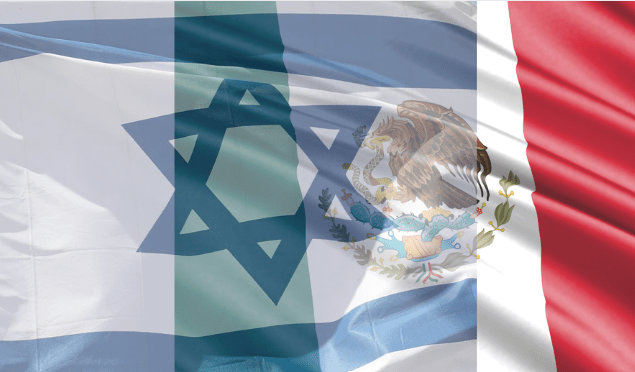
“What are you?” is a question I get far more often than you’d expect. Is it my appearance, identity, culture, or a dichotomy of the three? My features don’t fit neatly into people’s assumptions, and some might even call me racially ambiguous. Whenever I answer, “I’m half Mexican and half Jewish,” it usually requires an explanation, and as I stare back at their confused faces, I find myself having to justify my own identity.
They ask, “Jewish, like the religion?” or “Is your mom Jewish?” Sometimes someone will even say, “You don’t look Mexican.” Initially, I am surprised by how quickly people speak about cultural backgrounds they may not know much about. But I have also learned that most of the time, these questions aren’t meant to offend. They come from curiosity, and from people trying to make sense of a world more diverse and interconnected than ever before. I try to see these moments, not as accusations, but as a chance for people to understand different identities.
At the heart of it, my identity comes from my dad being Jewish and my mom being Mexican, and both sides of my family raised me deeply connected to their cultures. Our Mexican family’s meals, music, and even celebrations make up the liveliness of our heritage. For my Jewish side, I wasn’t raised practicing Judaism, and neither was my dad. On his side, being Jewish is about culture and ethnicity rather than religion. We look Jewish. We share the stories and the history. But in religious practice, we attend a Catholic church, were baptized in that religion, and we don’t celebrate Jewish holidays. The absence of these religious practices has never lessened the Jewish part of who we are. My brother and I live at an intersection of our cultures, with one expressed in celebrations and the other expressed through lineage and memory.
My dad’s family story is something I’ve held close since I was little. His parents met during World War II when my grandfather was stationed in England. When they married, traveled to America, and moved in with his family in Philadelphia, my grandmother entered a world that did not welcome her. She was Venezuelan, Catholic, darker-skinned, and not the partner they imagined for their son. Although she was loving, beautiful, and strong, they couldn’t see past what made her different. Their disapproval also wasn’t subtle, and it shaped her early married life in painful ways. After having two children, my grandparents moved to California to escape the discrimination and start fresh. They went on to have two more kids, one of them being my dad.
Growing up, my parents made sure we were immersed in both cultures. From my mom’s side, I celebrated Las Posadas, helped make tamales at Christmas, listened to live mariachis at family brunches, and even had a quinceañera. Ever since I was a kid, they have taught me that being Mexican is something to be proud of. This part of my heritage is bold and vibrant. From the music that fills the room to our colorful decor that transforms our gatherings, my Mexican side has always been alive around me and is proudly expressed in my everyday life.
From my dad’s side, I have embraced Jewish cultural traditions. My brother had a bar mitzvah, and while we didn’t participate in the religious aspects, we learned and honored the customs, stories, and celebrations. Whenever we have attended a bar mitzvah, my favorite part has been the Shabbat dinner the night before. The dinners that my family and I have attended were more intimate and smaller. Sitting around the table and hearing stories about ancestry, resilience, and tradition, I was able to feel connected to a culture that shaped my family long before I was born.
Throughout my upbringing, my mixed identity has given me a rare perspective on life that I genuinely cherish. Experiencing these two cultures at once has made me realize just how connected they actually are. Beyond their shared histories of hardship, where both have shown resilience generation after generation, the cultures themselves echo one another in ways that still shape who I am today. Both cultures place a high importance on keeping close-knit families and remaining connected to their roots. The holidays they each celebrate reflect on celebrating their resilience and honoring their ancestors. And both also have a strong sense of identity and pride in their heritages, which has taught me to remain true to who I am.
I have looked up to my grandparents in moments where I have experienced discrimination in my own life. Whenever I feel different or unwelcome, I try to find the same bravery that they once had when they picked up their entire lives to move to a new state. They have taught me that belonging isn’t always something you are handed. Sometimes it’s something you claim for yourself.
Being mixed has given me a unique lens on identity. I am not “half of this” and “half of that.” I am fully both. And while people may question or misunderstand my background, the blend of Mexican and Jewish cultures has given me a rich, layered identity that I wouldn’t trade for anything.


 Tekiah Magazine
Leave a comment