
By Anonymous
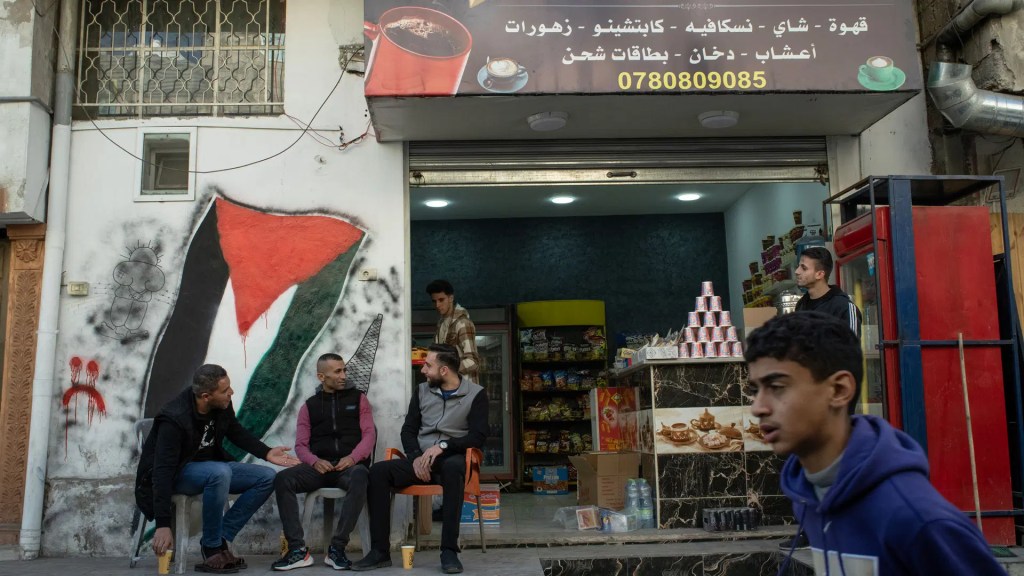
Credit: The World
In 2024, Al Jazeera published a story entitled, “Locked Out: Palestinians in Jordan Still Waiting to Return to Stolen Homes.” The story follows one man, Omer Ihsan Yaseen, a 20-year-old doctor living in al-Wehdat, a Palestinian refugee camp in Jordan. Within his home, Yaseen proudly displays the memorabilia of his Palestinian ancestors; a black key, ostensibly the one which used to open the doors to their home in modern day Israel (long since burned down), some soil from what is now Tel Aviv, Arabic text, and a small photo of Che Guevara. Yaseen details to the reporter, Nils Adler, how he has always felt that life in this refugee camp was but a temporary waystation before his family’s inevitable, triumphant return to their land. On Yaseen, Adler notes, “his eyes reveal a deep generational trauma.”
There is one problem with this story: it is a delusion. It is a delusion which has been inherited over generations, one which has now extended across time and space. The so-called refugee camp in which Yaseen lives, “has long outgrown itself and now melts seamlessly into the surrounding areas of southeast Amman.” In other words, this outpost, once used to house actual refugees, has become a suburb of Amman. Adler could not help but remark on the fact that the vast majority of the residents of al-Wehdat, “have lived their whole lives in these camps,” yet still think of themselves as refugees; Palestinians lying in wait for the day when they can return to the lands of their ancestors. Adler indulges this self-aggrandizing refugee mythology believed by so many Palestinians today, citing that, “Jordan today hosts about two million Palestinian refugees.” This is a most dangerous fiction. Jordan indeed has a Palestinian population today of 2.3 million, but these people are not refugees: they are Palestinians living in Jordan. A rounding error of these Palestinians are genuine refugees, departing from Gaza or the West Bank in the last few decades. By and large, these “refugees” are actually the descendants of refugees, that is, their ancestors were either forcibly evicted from or chose to depart their homelands within modern day Israel during the Nakba or the 1967 War. What is going on here? Why do the descendants of Palestinian refugees still enjoy refugee status, even when many of them have never been to the Palestinian territories?
This story begins on December 8, 1949 with the founding of the United Nations Relief and Works Agency for Palestine Refugees in the Near East (UNRWA). As the name implies, UNRWA was founded for the purpose of providing medical, economic, and other forms of support to Palestinian refugees. In 1950, when UNRWA formally began operations, their definition of Palestinian refugees enshrined in their charter was one whose, “normal place of residence was Palestine during the period of June 1, 1946 to May 15, 1948 and who lost both home and means of livelihood as a result of the 1948 conflict.” This definition was accepted universally. A refugee, after all, is, “someone who has been forced to flee his or her country because of persecution, war or violence,” according to the UN’s own High Commissioner for Refugees (UNHCR), a definition which works seamlessly with the above description of Palestinian refugees.
In 1965, facing increasing political pressure to prove that it was fulfilling its mandate and a growing population of children in refugee camps, UNRWA leaders made a shocking decision: they expanded their mandate, extending refugee status to up-to third-generation Palestinians whose ancestors had been displaced. This was quietly done as merely an administrative clarification, but the impact has been immense. There are now many second or third generation Palestinians living abroad who truly see themselves as refugees, even though this view of what a refugee is is totally discordant with the definition provided by the UNHCR. In 1982, this administrative clarification was extended to all descendants of Palestinians displaced by conflict with Israel, giving to Palestinians living abroad an unremitting feeling of legal entitlement to land which is no longer theirs, and hasn’t been theirs for decades.
“Even if the basis of the claim regarding the Right of Return is legally dubious,” you might be tempted to argue, “isn’t denying Palestinians return to their ancestral lands morally indefensible?”. Allow me to use myself and my own family anecdotally to demonstrate the absurdity of the above idea. My Jewish great-grandparents were ethnically cleansed from Kyiv, Ukraine (then the Russian Empire) around 1912. The Russian Empire kept meticulous records. It would not be difficult to find the exact house they were kicked out of by antisemitic pogromists. Do I have a right to return to that house? How about the rest of my family, can I bring them with me? The answer to these questions is clearly “no,” because moral injury does not transmit indefinitely across generations as a property right. Human history is a complex tapestry of people being displaced, either violently or otherwise. Connections to land become more and more tenuous each generation. For example, what percentage of your lineage has to belong to a Palestinian who was displaced by the Nakba for you to claim the Right of Return? 100%? 50%? Is 25% sufficient to protest against Israel with righteous indignation and demand your grandfather’s or great grandfather’s land be returned to you? How far into the past must we go to determine whose land is whose? These questions, for which there are no good answers, are the reason why we must no longer tolerate the delusion of the Right of Return.
To be crystal clear: Palestinians are the only ethnic group in the history of the world for whom the descendants of their refugees are considered refugees themselves. The exceptionalism is staggering, and has had profound consequences. Millions of Palestinians living abroad have been placed into a juridical limbo where their very identities are frozen in international law. It has also encouraged maximalist demands from the Palestinian side, one of several roadblocks preventing lasting peace between Israelis and Palestinians. To make headway in the Israeli-Palestinian conflict, Palestinians must first relinquish the fantasy of the Right of Return. It is logistically impractical, legally meretricious and ethically nonsensical. Until this fiction is abandoned, peace will remain not a political problem to be solved, but a hostage to an inherited myth.

 Tekiah Magazine
Leave a comment