
By Josephina Howard
Pesach is not about matzah. Or at least, it is not just about matzah. The holiday is built around a story—one about slavery, resistance, and freedom—and the rules people focus on are really just a way of forcing you to pay attention to that story.
The story of Pesach comes from the Book of Exodus. At its core, it is about slavery, resistance, and ultimately, freedom. More specifically, it follows the Israelites in Egypt and their escape from oppression under Pharaoh. The story starts with the Israelites living in Egypt, where they are enslaved and forced into hard labor. A new Pharaoh comes to power and, worried about how large and powerful they are becoming, starts making their lives significantly worse. This includes ordering the killing of Hebrew baby boys, which is as brutal as it sounds and sets the tone for everything that follows.
One child, Moses, is saved when he is placed in a basket in the Nile and ends up being raised in Pharaoh’s own household, which is kind of ironic when you think about it. He grows up inside the system that is actively hurting his people. As an adult, Moses realizes who he is and what is happening. He ends up fleeing Egypt, and later has this encounter with God in the form of a burning bush, where he is told to go back and demand that Pharaoh free the Israelites. He is not exactly excited about this, but he goes anyway and delivers the now-famous line: “Let my people go.” Pharaoh refuses.
In response, God sends ten plagues to Egypt—everything from water turning to blood to total darkness. Each time, Pharaoh either says no or changes his mind right after. It is frustrating on purpose. The story makes it clear that change does not happen quickly, even when it obviously should. The final plague, the death of the firstborn sons, is what finally forces Pharaoh to give in.
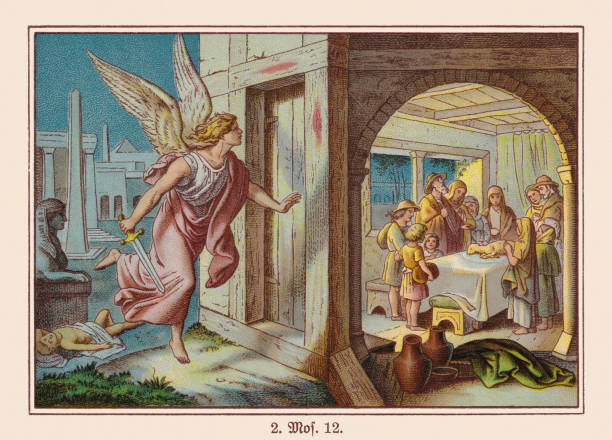
Before that last plague, the Israelites are told to mark their doorposts with lamb’s blood so the plague will “pass over” their homes—hence the name Passover, or Pesach. After this, Pharaoh finally lets them leave. They leave fast, without time for their bread to rise, which is why matzah becomes such a big part of the holiday. It is a small detail, but it sticks, which says a lot about how people remember things.
Almost immediately, Pharaoh changes his mind again and sends his army after them. The Israelites end up stuck between the army and the Red Sea, which is not a great position to be in. Then the sea splits, they cross, and the Egyptian army follows and is drowned when the water comes back. At that point, the Israelites are no longer enslaved—but they are also not settled anywhere. They are free, but still figuring out what that actually means.
That is really where the meaning of Pesach comes in. It is not just about leaving Egypt; it is about what comes after. Freedom sounds simple, but the story makes it clear that it is not. It is something you have to adjust to, and that process is messy and uncomfortable.
For me, Pesach is less about the rules themselves and more about what they make you think about. Getting rid of chametz—or unkosher for Passover food—is inconvenient, but that is kind of the point. It forces you to change your routine and actually notice what you are eating and doing. The story being repeated every year does the same thing—it is not just something that happened once, it is something you are supposed to think about now.
The most central ritual of Pesach is the Seder, which is basically a very structured dinner on the first two nights. During the Seder, the story of Exodus is retold using a text called the Haggadah, which walks you through everything step by step. There are symbolic foods—bitter herbs for suffering, salt water for tears, and matzah for both hardship and urgency. Nothing is random, even if it sometimes feels that way.
There are also ways to keep people engaged, especially kids, like the “Four Questions,” which all start with “Why is this night different from all other nights?” The goal is not just to repeat the story, but to actually think about it and question it. That part is important.
Throughout the holiday, observant Jews avoid chametz, which includes most leavened grains like bread and pasta. Instead, matzah replaces them. This is probably the most noticeable part of the holiday—and, depending on who you ask, the hardest. It takes effort and planning, and it pulls you out of your normal habits, which again is the point. The length of the holiday also depends on where you are: in Israel, Pesach lasts seven days, while in the diaspora it is typically observed for eight.
Pesach is ultimately about memory and meaning. It asks people not just to remember a story, but to see themselves in it—to understand that freedom is not guaranteed and not passive. This Pesach, take the time to actually understand what is being remembered. The story is widely known, but the meaning is easy to miss if you are not paying attention. Talk to people who celebrate it, go to a Seder if you can, and notice the details. They are there for a reason.



Leave a Reply