
By Mara Riegel
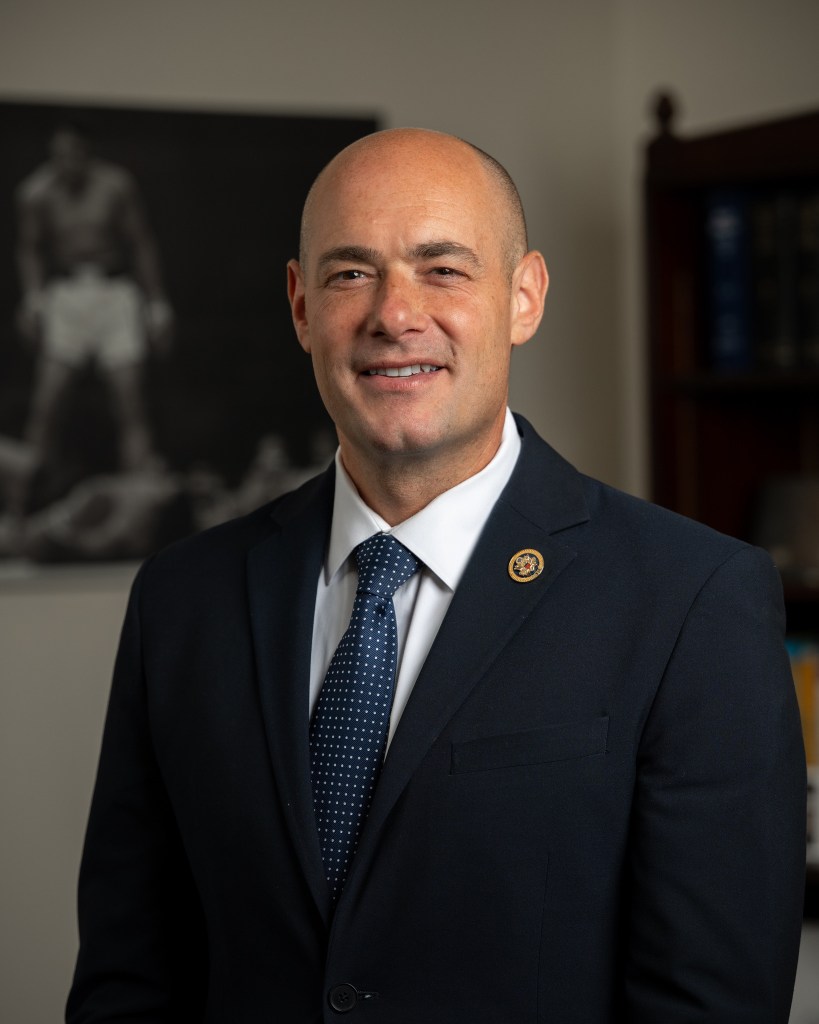
Credit: Congressman Greg Landsman
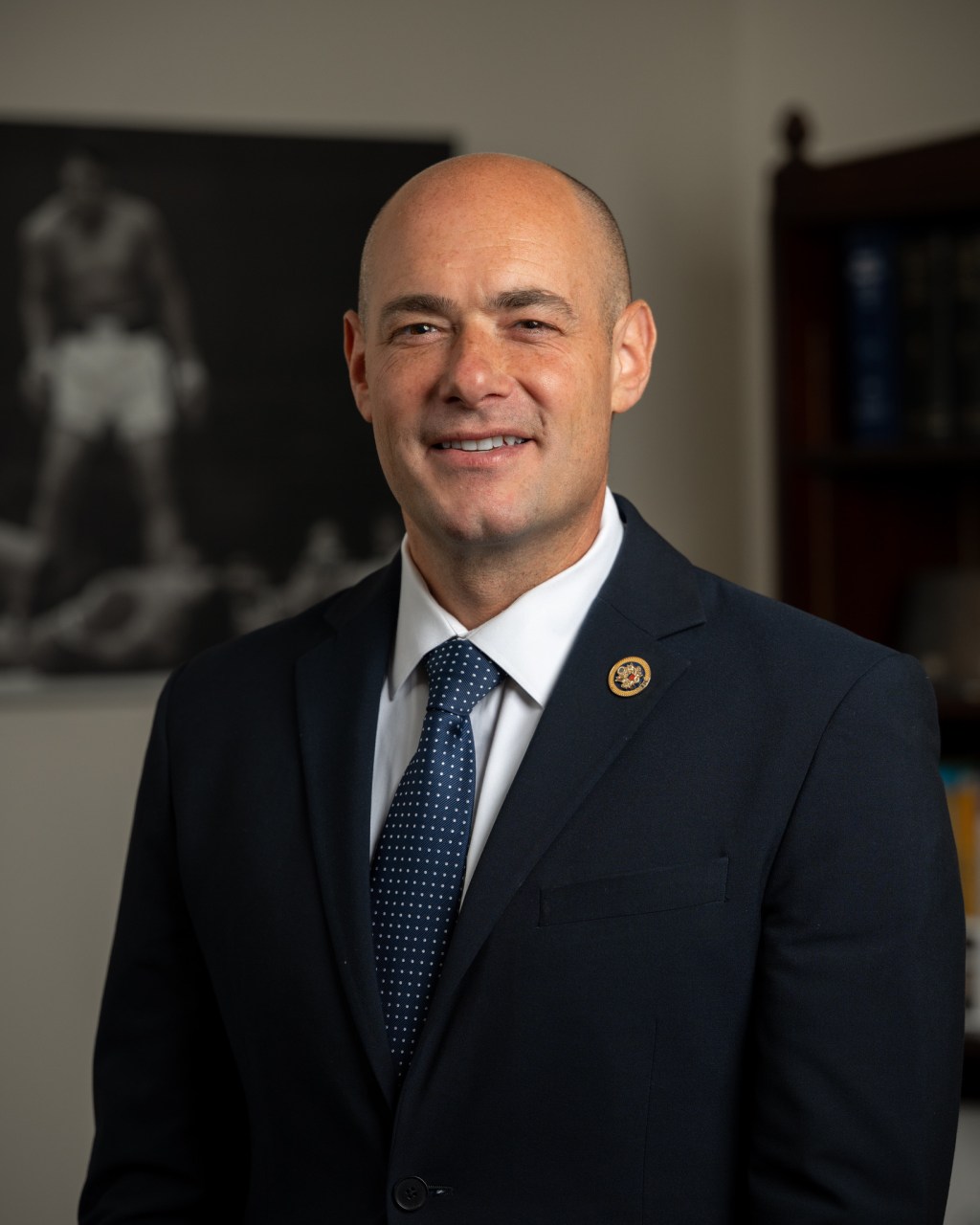
When Congressman Greg Landsman, a Democrat representing Ohio’s first congressional district, agreed to let me interview him for this article, the opportunity felt frankly surreal. Choosing Rep. Landsman felt sort of symmetrical to choosing to interview the representative who I voted for. I voted for a non-Jew to represent a traditionally purple congressional district with a large Jewish population, this being Laura Gillen of New York’s fourth district. Rep. Landsman is a Jewish representative in a traditionally purple district in a roughly 10% Jewish area.
Congressman Landsman is currently serving his second term in office, having first been elected in the 2022 midterm cycle during which he defeated a 13-term incumbent. Before his time in office, Landsman served as a public school teacher, after which he was elected to the local Cincinnati City Council.
Since joining the House of Representatives, Landsman has successfully introduced bipartisan legislation aimed at lowering prescription drug costs, protecting public safety efforts, funding $14 million worth of projects impacting his home district, and protecting veterans, as well as his work on the House Energy and Commerce Committee.
These initial impressions of generosity and unfeigned care, which are clearly exemplified through Rep. Landsman’s legislative priorities were reinforced when I actually met him. When I entered the Congressman’s DC office, I was immediately nervous. I had never gone on my own to meet with any member of Congress before.
But as soon as I walked into the room in which I interviewed Rep. Landsman, there were no theatrics to daunt me further, just a kind staffer whom I was already familiar with, and the Congressman himself sitting behind a simple table, initially asking me about myself before anything else. This gesture of consideration and curiosity meant a lot to me, and it truly helped me see Rep. Landsman not just as an elected official but as another normal person like myself.
Having a first-hand role in witnessing the state of antisemitism and how the government handles such issues, particularly in higher education settings, I took the opportunity to ask the Congressman about where the line is between free speech and necessary protection of Jewish students and what role legislators have in that balance. The Congressman answered with a
“two-fold” approach.
“As lawmakers and national figures, we have to explain what the rules really are, and yes, that means embracing free speech; it’s one of the most important constitutional rights we have. Not all speech is protected, and when you are on a campus, for example, there are other rules that come into play. Being able to explain to folks, ‘Look, yes, you have the right to free speech and the right to assemble and speak your mind for sure, but you can’t just say anything, there are things that are problematic, and those include things that are hateful that could cause violence, could cause unrest, or could lead to people getting hurt.’”
He continued with the second part of his philosophy, prefacing that rules of expression are different on college campuses and then stating, “[T]he best approach is to say, ‘Look, here’s where we’re gonna allow people to protest, it’s gonna be nearby, but not in the middle of everything, and you can protest there, and you have free speech. However, we’re also going to help you understand where the line is. And so if you say these things, we have the right to say that’s your warning, and if you keep saying it, we have the right to remove you, because we have to protect everybody, including you.’”
The Congressman continued, outlining a standard where rules are clearly defined, as are consequences. The overarching message was that protestors are entitled to their speech and opinions as much as anyone else, and that protecting students of all kinds, not just Jewish students, does not have to come at the expense of losing speech.
The Congressman was further asked about how he has learned to work constructively and disagree with his colleagues in Congress who may dislike his identity as a Jew and his related stances. He said, “I try to talk openly and honestly, and I think it’s important to have a relationship if you can and talk these things out, which I do. I find that I ultimately lose to the internet and social media, meaning that I make some progress, but then the internet, for some of these folks, always wins. And that’s part of the challenge, is that if you’ve got an extreme view, or a view that’s outside the mainstream on this issue or others, odds are you’re too online.”
I was further curious about why the Congressman initially became involved in politics, and how his identity as a Jew impacted that choice and his legislative philosophy. Landsman detailed the core Jewish belief of healing the world, or tikkun olam, noting that “You appreciate very early that you have a role to play in helping people’s lives. And that can be the immediate world around you, your family, your friends, but you start to discover that the world can be bigger if you want it to be.” He explained that these beliefs were certainly part of why he became involved in politics, further responding that this was also part of why he went into teaching.
As many Jewish students are scared to express their identities today, I asked Rep. Landsman what advice he would give to these young adults. He replied, “It is entirely understandable that you want to be careful and protect yourself, but you’ll feel better in the community. The more community you find, the safer you’ll feel.”
I concluded our interview by asking the Congressman something lighter: which colleague he would bring to Shabbos of all of them. He responded jokingly, “I think I get enough time with them as it is.” He further responded more seriously, “Jennifer McClellan, I love Jennifer McClellan.” McClellan represents Virginia’s fourth district as a Democrat.
This meeting gave me a very realistic picture of what dealing with antisemitism and Jewish issues on the national level really looks like. It showed me that there are elected officials who care in a way that is more than lip service, and that there are ways to make things feel better even while maintaining the full rights that come with disagreeing in America. Tekiah and I are very grateful for the opportunity to have learned this.





Leave a Reply