
By Mara Riegel
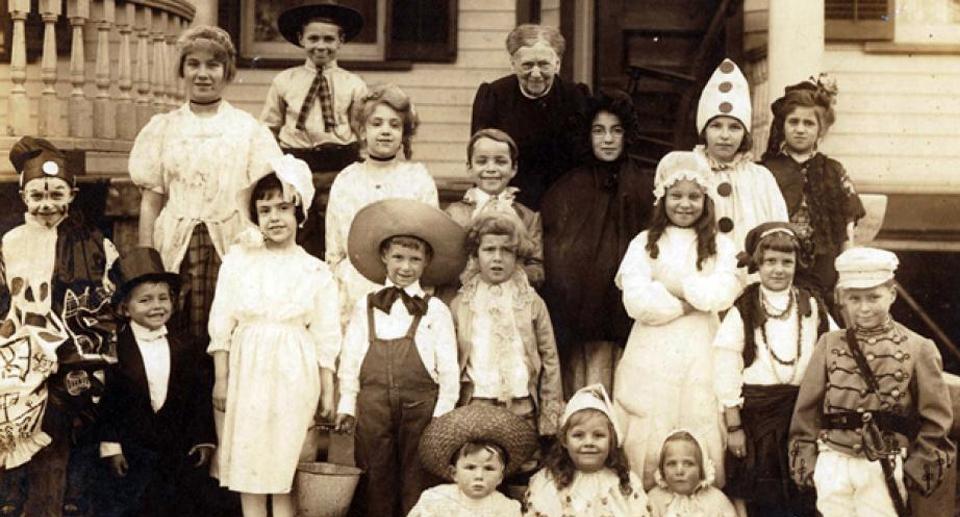
Credit: Southern Jewish Historical Society
On Monday, March 2, 2026, the festival of Purim began at sundown. The festival lasted through Tuesday the 3rd, though in Jerusalem it will extend through Wednesday the 4th. This date is not the same on the English calendar every year, but on the Hebrew calendar it is. Purim falls on the 14th day of the month of Adar, the sixth month of the Hebrew year.
The Purim story comes from the Megillah, more commonly known as the Book of Esther. In a nutshell, the story of Purim is one of endurance, and one of the early examples of the Jewish people surviving the plot of other people to annihilate them in their entirety.
The story begins with a king named Ahasuerus (pronounced ah-hash-veh-rosh) and his wife Vashti. Vashti disobeys the king, not wanting to attend one of his parties to show off on his behalf, so he has her executed. Upon his newfound bachelor status, the king decided to hold a beauty pageant to find a new queen. At this pageant, a lovely girl named Esther caught the king’s eye, and he decided to marry her, even without her having divulged her nationality to him.
Esther had an uncle named Mordechai, and he was the leader of the Jews, thus making Esther a Jew, too. The king’s top advisor, however, was a man named Haman (frequently pronounced hey-min) who absolutely hated the Jews.
One day, Mordechai overheard a plot by two guards to assassinate the king, but he foiled it and the guards themselves were executed. His act of heroism was noted by the king’s court. Haman and Mordechai meet one day, and Haman commands Mordechai to bow to him, which he disobeys.
Absolutely enraged at the disrespect from Mordechai, Haman goes to the king and requests his funds and permission to kill not only Mordechai, but the entirety of the Jewish people as punishment. Mordechai, as leader of the Jews, commanded everyone to pray, repent, and fast upon learning of the impending execution of his community.
Mordechai, in a last-ditch effort to save his people, sent a message to his niece, Esther, to see if she could do something to stop it. Esther explained to her uncle that she could not approach the king, nor could anyone else, at the risk of being executed. She decided that she would pray and fast for three days and then approach the king, disregarding her own risk of death. On day three, she invited her husband to a feast to be shared with Haman.
Meanwhile, Haman was offended yet again as Mordechai further refused to bow to him. At the urging of his wife, he constructs a public gallows and resolves to hang him the next day. Later on, the king asks for the court’s records to be read to him to help him sleep and discovers what Mordechai did for him. He asks aloud what should be done to honor Mordechai. Haman then appears, and assuming that the king seeks to honor him, outlines a plan for the man to be led around on a royal horse in royal robes. Haman is thrilled about this until the king instructs him to issue this honor to Mordechai.
Later, Haman and King Ahasuerus attend Esther’s banquet, wherein she finally reveals that she is indeed Jewish. Ahasuerus is absolutely outraged that someone would dare try to kill his beloved wife and her people, and orders Haman to be executed on the very gallows he built for Mordechai. Because the order could not be reversed, the king allows Mordechai and Esther to write a new order to preemptively kill their attackers, of which 10 were Haman’s sons. The Jews then lived to fight another day, and Mordechai rose to the rank just under the king himself.
This story serves as a testament to the endurance of our people, and as a parable about acting in secret and by pretending, both as people and from God’s perspective. The story outlines a series of actions that come from the shadows, both for and against the Jewish people. Esther hides her identity as a Jew, and she moves quietly and from the shadows around that identity. Mordechai operated quietly to save the king, and sought no esteem as a result. On the part of God, he pretended that he would allow the slaughter of the Jews, when he ultimately did not.
Personally, I observe the lessons of Purim quietly and introspectively each time the holiday rolls around. I think about the fact that Mordechai acted out of goodness and not out of a desire for recognition and was later rewarded anyway. It serves as a reminder to me to be good not for the sake of praise, but just for the sake of being a good person. I think about Esther weighing the likelihood of being killed for speaking up, and doing it anyway. It reminds me of the bravery I should seek to aspire to.
So how do Jews celebrate this holiday and all of its lessons? An important practice is to give to those in need, following the example of Mordechai. The holiday emphasizes providing for the less fortunate as a sign of unity and care for others.
Many children and adults also frequently dress up in costumes as a reminder of the pretending that occurred in this story. Many people hold feasts or carnivals. More observant Jews will often choose to hear the megillah read aloud. Frequently at services where the story is read, people use a noisemaker called a grogger (or grager) to signify booing whenever Haman’s name is mentioned.
Most popularly, people eat a baked good called Hamantaschen to commemorate the occasion. These pastries are triangle-shaped tarts filled in an open center with many different fillings. These pastries are shaped like triangles because Haman was known to wear a triangle shaped hat.
Around Purim, talk to the Jews in your life about the story. Celebrate with them and learn with and from them. It is a beautiful holiday, and many would be happy to share it with you.




Leave a Reply