
By David Demakos
Credit USA Today
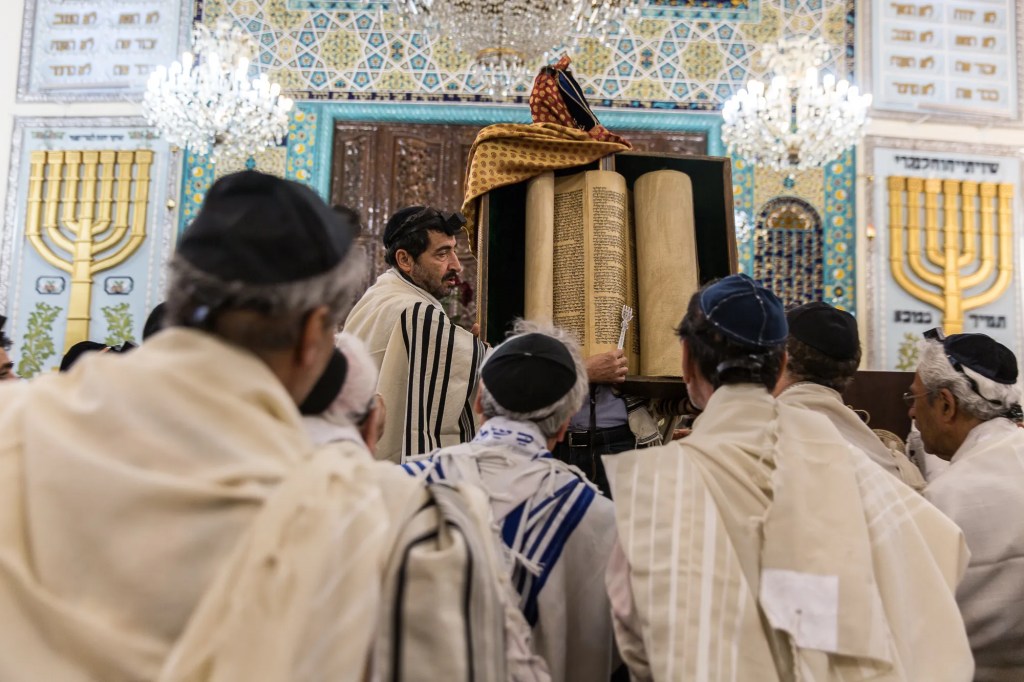
It is unsettling for me to watch what is happening in Iran right now in a way that can’t quite be put into words. It’s not just any other foreign policy crisis that I kindly scroll past on my phone; it’s people my age who are risking their lives to protest a repressive regime that no longer represents them. And as a Jew, I can’t separate this moment from the long and complicated history that connects the Jewish people to Persia, a history that the regime is constantly trying to erase or weaponize.
Today, Iran is defined by exhaustion. Years of corruption, collapse, and international isolation have again pushed people back on the street because silence has become impossible. The Ayatollah’s response has been predictable: internet shutdowns, violence, mass arrest and a claim that internal dissent is foreign-driven. What strikes me most is how disconnected this rhetoric feels from reality. The Iranian people want affordable food and better futures. They don’t want leaders who view suffering as collateral damage.
While Iranians are protesting the regime in the streets, the regime is anchoring its identity in opposition to Israel and, by extension, Jewish identity. Growing up Jewish, I was taught that Persia was a place of refuge– the land of Cyrus the Great, who allowed Jews to return home after exile, not as a place of hostility. This story sits at the center of modern Jewish memory regarding Iran. It’s painful, but not surprising, to watch a modern Iranian government claim the highest moral authority, while erasing the two-millennium history of Jewish life in the region.
This connection is not as ancient as it seems. There are still Jews who live in Iran today: families who speak Persian, who see themselves as Iranian, who have survived revolution, war, and decades of suspicion. On paper, Jews are “protected” and granted recognition and a seat in parliament. The reality is starkly different. The protection comes with certain conditions. Silence. Loyalty performances. Public denunciations of Israel when tensions flare up. The existence of Jews in Iran is the regime’s proof that they aren’t antisemitic, even as antisemitic conspiracies fly around Tehran.
I don’t pretend to speak for Iranian Jews or Iranian protesters, but I can recognize a pattern. Authoritarian regimes rely on scapegoats to justify their failures. In Iran, Jews, Israel, and the US serve that purpose. Anti-zionism becomes a tool for internal control and not just foreign policy. The regime can redirect rage towards Israel rather than acknowledge that it is its own people that are suffering the most.
Now, many Iranians are no longer playing. Protesters want domestic change rather than ideological wars abroad. They are tired of being sacrificed for slogans, and are rejecting hostilities altogether, not because they have aligned with Israel but because they want their government to care for them. This public rejection matters. It cracked the illusion that the regime says it speaks for the Iranian people.
This moment resonates deeply with Jewish history and values. Judaism has been shaped by the diaspora, by being in exile, and the insistence that power must be accountable. The Torah is careful not to glorify rulers who rule through fear; Pharaoh ruled through fear and God took his eldest son from him and reigned havoc on Egypt. The story of Persia is unique in this cycle of oppression that the Jewish people have faced. Cyrus the Great, Koroosh, is remembered because he allowed exiled people to return home. He is revered in the Jewish tradition and is a part of Judaism’s moral memory. Sadly, the Iranian regime is no different than Pharaoh. They won’t let their own people go.
This is why the Iranian regime’s treatment of its citizens and Jewish minority matters so deeply. When protests are blamed on “foreign enemies,” and when economic collapse is justified through endless confrontation, and Jews in Iran are forced to publicly denounce Israel for their safety, it violates moral norms that Jews have held on to for centuries. Jewish tradition does not value political theatre, human dignity comes first, and suffering cannot be excused by ideology. These are the lessons that Jews have learned because Jews have lived at the mercy of unchecked power.
In demonstrations outside of Iran, Israeli flags and Iranian opposition flags have flown side by side. At universities, students have been careful not to walk over Israeli and American flags placed by the government. These actions are a refusal to perform the regime’s demanded hatred.
What is happening right now in Iran is not a Jewish issue, but it is an issue that Jews should recognize and take to heart. It is the exact struggle that Jews have faced for millenia; the struggle of a people demanding dignity by a system that survives by denying it. These protests crack the regime’s main lie that they speak for the Iranian people. They don’t. As a Jew, watching Iranians risk their lives feels painfully familiar. It echoes what Judaism stands for. A government that cannot protect its people has already forfeited its moral authority.



Leave a Reply